
Are you still tracking your build with random snapshots taken on someone’s phone?
That’s how most construction companies depend on inconsistent or outdated records to showcase progress. But clients, investors, and stakeholders expect more these days. They want confidence, clarity, and proof of progress.
Fortunately, video construction in Brisbane is changing that. At grizzlybearmedia.com.au, we showcase construction sites using time-lapse construction, drone videography, and professional storytelling from over 30 years in TV and communications.
In this article, we’ll walk you through how construction companies use professional video for monitoring, marketing, and client updates from start to finish. But first, we’ll explain time-lapse and drone footage.
How Time-Lapse and Drone Footage Capture Your Construction Project
Time-lapse construction and drone videography work together by combining ground-level documentation with aerial perspectives. A camera on site records daily progress, while drones give a wider perspective. And once you sync both methods, you get a full visual record of your build.
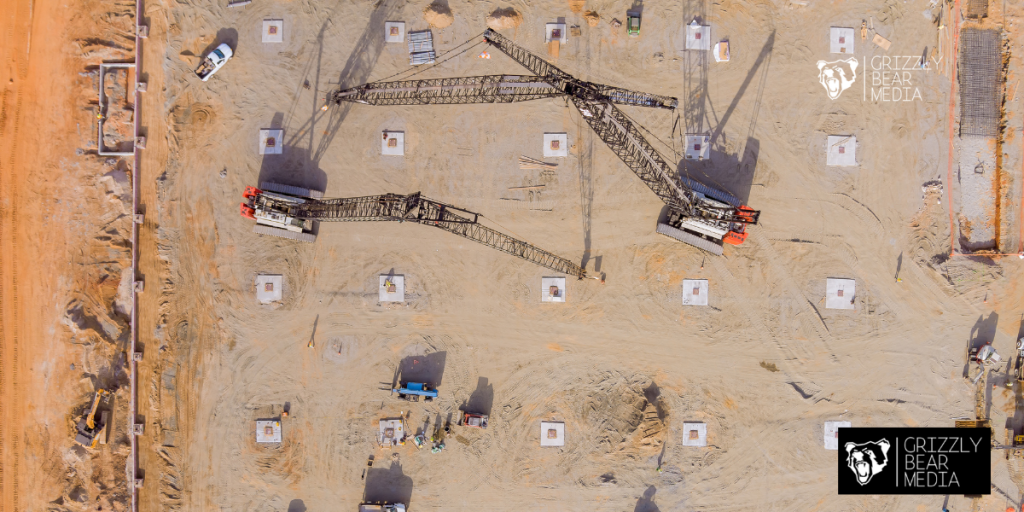
Here’s how you can set up both systems.
Time Lapse Cameras
A time-lapse camera stays in one spot on your site and can record automatically for months. Many run on solar power, so you don’t need to change batteries often. The camera will take photos at regular intervals, and after that, the software will turn them into a smooth video.
This setup is perfect for tracking milestones because you can see exactly when each phase started and finished. Your project managers can also keep this footage handy in case disputes come up later about timing or construction methods.
Pro tip: Don’t leave exposure or white balance on Auto. Set them manually so the changing light throughout the day (and across seasons) doesn’t affect colour and brightness.
Drone Videography
Drone photography shows what ground cameras can’t. You can start by scheduling regular flights over your construction site to capture progress from above.
From this perspective, you’ll see how different areas connect and give stakeholders a sense of the project’s true scale. Drones also reach spots that are too dangerous or impossible to film from the ground, like roofs or upper-level structures.
Synchronising Drone and Ground Footage
Now, when you stitch these two views together properly, you can get smooth, professional construction videos. The time lapse will show steady progress, while drone footage will add scale and context. After combining them, show it to your stakeholders and let them enjoy the full build in action from every angle.
But you need to time your drone flights to match your time-lapse intervals. So if they’re out of sync, your final video will likely be choppy and confusing instead.
What Can Go Wrong and How to Avoid It
A bad camera angle can waste months of documentation in one poor decision. Dirty lenses create the same problem by ruining otherwise perfect high-quality content that took weeks to collect.
Many teams also get interval settings wrong and miss the moments clients want to see most, like frame-up day or roof completion. Which is why we recommend planning your editing workflow before installing equipment.
Promote Your Business with Construction Time-Lapse and Drone Videos
Your construction videos can continue delivering value even after the project is finished. For instance, you can use that footage as a marketing tool to attract business long after handover. Let’s look at how you can do that.
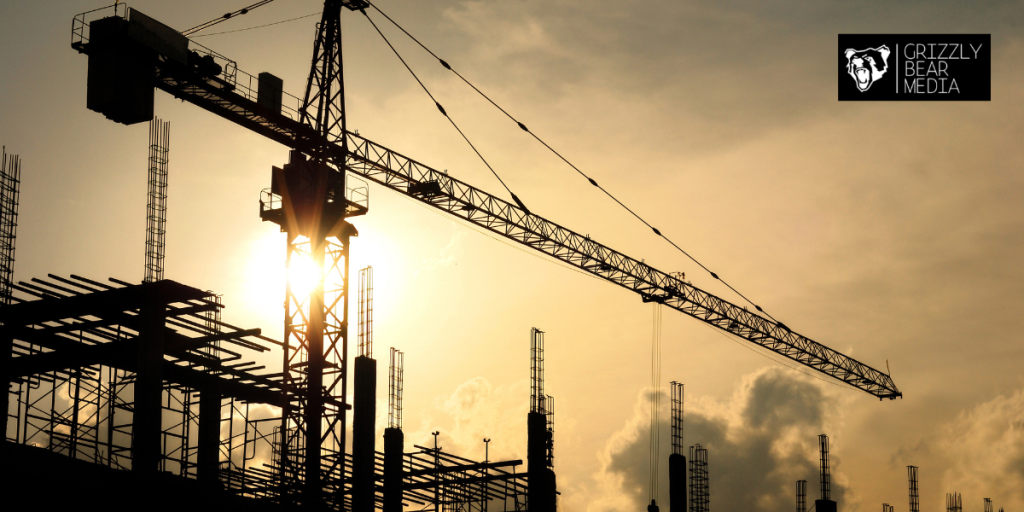
Marketing Construction Videos Off the Site
We often notice that the best construction companies pull short clips from their time-lapse footage for social media and client presentations. That’s because even a 30-second clip of a foundation pour or steel frame can grab more attention than text alone.
But that’s not the main purpose of these shorts. It’s mainly to show your site monitoring setup and prove your ability to deliver on time. Once your viewers see how your team handles challenging construction, they’ll likely imagine how you could help with their project.
What Your Clients Want to See
Now, your clients will usually focus on three main things when they watch your construction videos. They’ll want:
- High-resolution images that show detail.
- Consistent updates that prove progress is happening.
- Signs that safety is prioritised on your sites.
This combination builds trust. Rather than just reading about transparency, stakeholders watch your construction project progress week by week (and notice all the small details you’re taking care of). That visual proof is worth more than any promise you could write in a proposal.
Create Videos That Reflect Your Capabilities
Now, let’s talk about the content itself. Different audiences care about different things in your videos. For instance:
- Clients want to see your attention to detail and problem-solving.
- Business partners need proof that you coordinate well and meet deadlines.
- Future projects need examples of your team’s skill and ability to handle challenges.
So make sure each of your videos highlights what sets your team apart. Start by showing your precision in every task. Then demonstrate how you handle challenges that could trip up less experienced construction companies.
Showcase Your Construction Progress with Professional Video
So, are you ready to stop relying on random phone photos to share your construction process? The construction industry is moving fast, and so you need to catch up to it.
But you don’t need drone pilots and time-lapse systems on every project right away. Test the approach on one build, learn what works, then scale up as you see results. This way, you can identify the shots that best communicate progress, keep clients informed, and create a clear record of quality work without overwhelming your team.
Want to see what professional construction videos can do for your business? Grizzly Bear Media has spent 30 years telling stories that connect. Let’s make your next project stand out.